Jungle Food Chain by Keara Elmore Biology Diagrams Birds, reptiles, amphibians, and small mammals often include centipedes in their diet, making them a vital link in the food chain. In conclusion, centipedes are intriguing arthropods with a long evolutionary history. With their diverse species, adaptability to various habitats, predatory nature, and ecological role, centipedes contribute to the

Lizards essentially help sustain food webs spanning from large jungle cats to tiny mammals like shrews. Amphibians. Surprisingly, various frog and salamander species also opportunistically prey on small lizards when they can overpower them. Giant tropical centipedes like the 12-inch-long Scolopendra subspecies found across Eastern

What Do Centipedes Eat and How Does It Impact the Ecosystem? Biology Diagrams
Within this dense, green world, the food web is more than a mere chain; it weaves a vibrant pattern of life. In sharp contrast to the simplistic image of a linear progression, the rainforest's food web depicts a complex network of interdependence. Trophic levels: These are the steps in the food web. Producers: plants at the bottom The jungle food chain is broken into a handful of groups that describe a species' role in the overall rainforest ecosystem. Down at the ground level are the producers, such as the trees, shrubs and plants on which many rainforest animals depend on for food and shelter. Also down there are the decomposers, like mushrooms, termites and worms. Understanding what centipedes eat is crucial for appreciating their ecological role and the importance of these creatures in the food chain. In this article, we will delve into the dietary habits of centipedes, exploring their food sources, feeding behaviors, and the significance of their predation in various ecosystems.
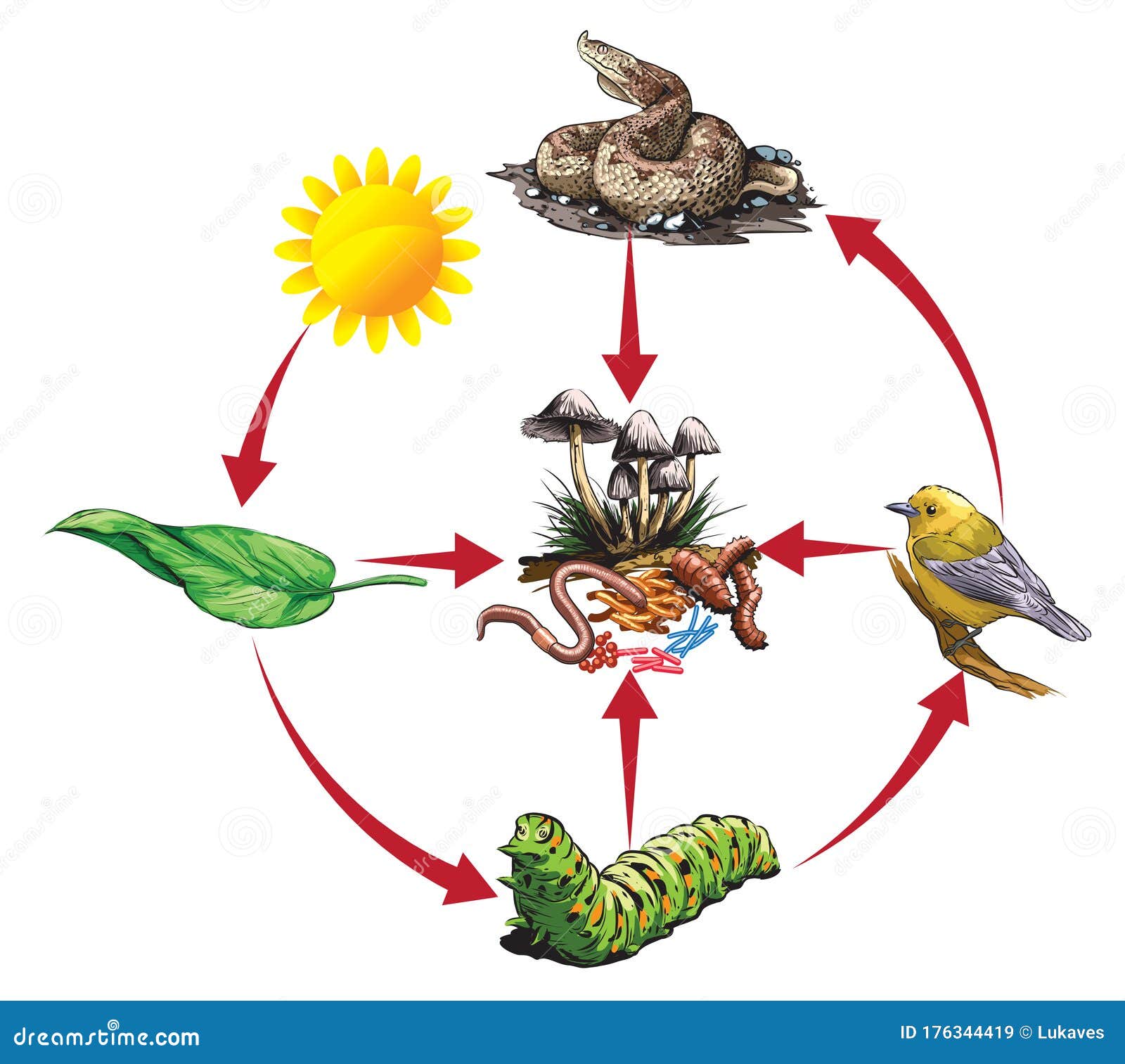
Secondary Detritivore: Millipede, centipede (consumes partially decomposed organic matter) Tertiary Detritivore: Small animals (consumes millipedes and other detritivores) A food chain is a linear representation of organisms at the various trophic level, and the flow of energy and nutrients. On the other hand, a food web is a natural The Amazonian Giant Centipede (Scolopendra gigantea) is a centipede that lives in the tropical and sub-tropical rainforests and tropical dry forests of South America and the Caribbean. As a carnivore, the Amazonian Giant Centipede can overpower and kill many invertebrates. The Amazonian Giant Centipede has an overall length between 11"-11.8" (28-30 cm) and width of .91"-1.14" (23-29 mm The Omnivores. Omnivores are versatile eaters, and they form the next layer in the rainforest food chain and web. The agouti (a relative of the guinea pig) is one of these omnivores, eating everything from fruits, nuts, and seeds to small insects.Their ability to adapt and fill their stomachs with whatever's available makes them important connectors in the web.
